DevOps & Containers
10 min readBack to blog
Modern application development is increasingly defined by speed, scalability, security, and the ability to move from an idea to a working product quickly. Developers no longer want to spend weeks configuring servers, setting up databases, building authentication systems, managing file storage, and creating basic APIs from scratch.
This is where Backend as a Service (BaaS) becomes valuable.
With Supabase on the Sohobcom platform, developers and technical teams can build a complete backend environment that includes databases, authentication, security, file storage, realtime updates, and server-side functions within one integrated platform.
Most modern applications can be simplified into two main parts:
The frontend is everything the user sees and interacts with, including:
Pages
Buttons
Forms
Dashboards
Mobile screens
Interactive components
The backend is the part that works behind the scenes.
It is responsible for processing data, enforcing business rules, managing users, securing operations, and communicating with databases and external services.
A simple formula is:
Frontend + Backend = A Complete Digital Application
For example, when a user logs in, submits an order, uploads an image, or sends a message, the frontend sends a request to the backend.
The backend then:
Receives the request.
Verifies the user's identity.
Checks permissions.
Applies business logic.
Reads or updates the database.
Returns the result to the application.
The backend can therefore be described as the brain and invisible engine of an application.
Its core responsibilities include business logic, database management, authentication, authorization, APIs, security, and system integration.
Traditionally, creating a backend required developers to configure and maintain many separate components.
A team might need to:
Provision servers.
Install and configure a database.
Create authentication services.
Build APIs.
Configure file storage.
Implement security rules.
Manage backups and maintenance.
Monitor infrastructure.
This process can consume a significant amount of development time.
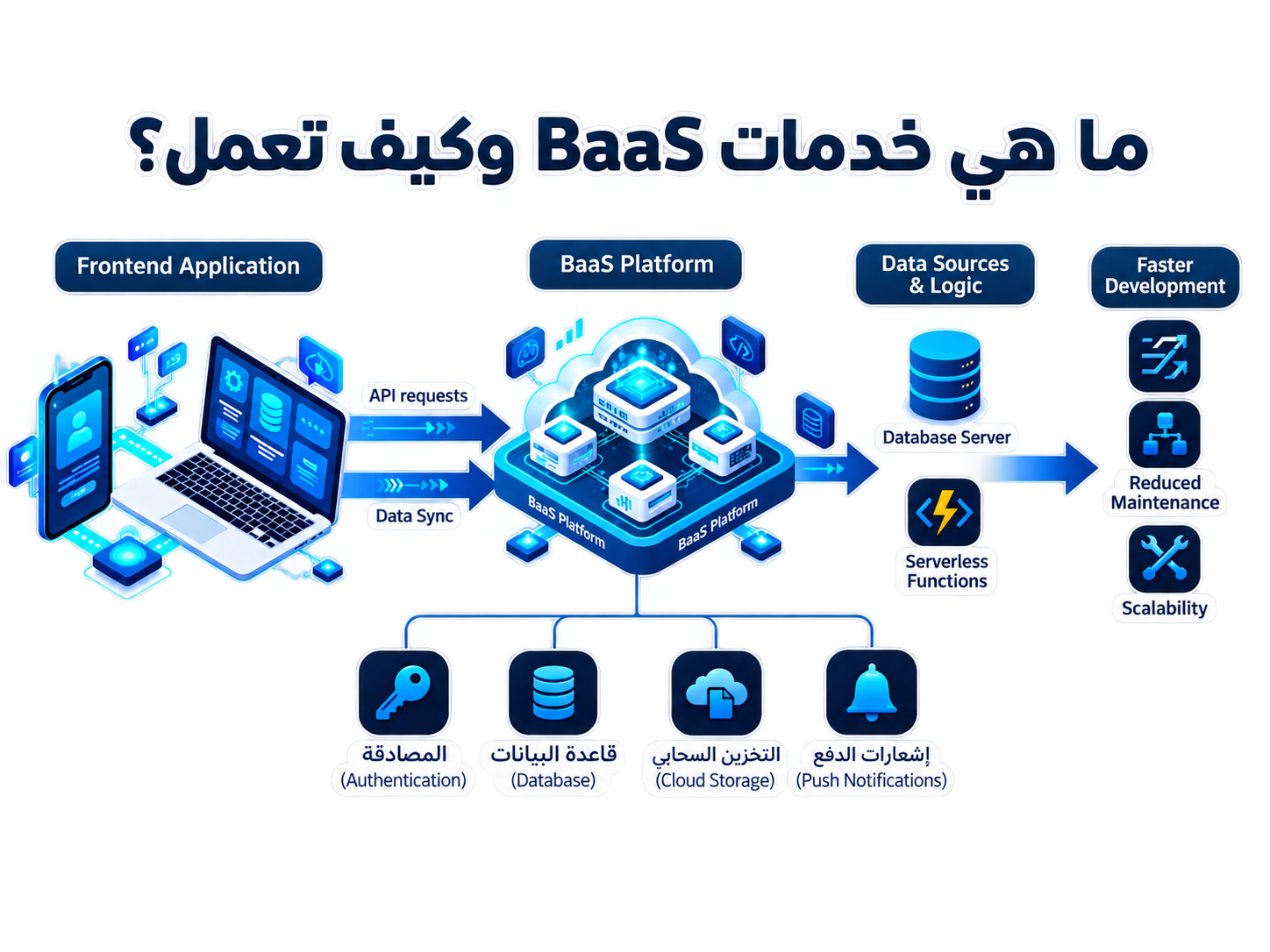
Backend as a Service (BaaS) simplifies this model by providing managed backend capabilities through a unified platform.
Instead of building every component manually, developers can use ready-made services such as:
Database + Authentication + Storage + APIs + Realtime + Server-Side Functions
These services are accessed through SDKs and APIs, allowing developers to focus more on their applications and less on infrastructure management.
Before BaaS platforms became widely available, launching a new application backend could involve extensive server administration and custom backend development.
With a BaaS approach, development teams can shift their focus.
Instead of spending most of their time on:
Server configuration
Authentication code
Repetitive CRUD APIs
Infrastructure maintenance
File management
teams can concentrate on:
Product Idea → User Experience → Application Features → Customer Value
This makes BaaS particularly useful for:
Web applications
Mobile applications
Startups
Rapid prototypes
Internal business applications
Educational projects
Digital platforms that need faster time to market
Supabase is a backend platform that brings together many of the services required by modern applications.
Its architecture is centered around PostgreSQL and provides developers with a unified environment for building and managing application backends.
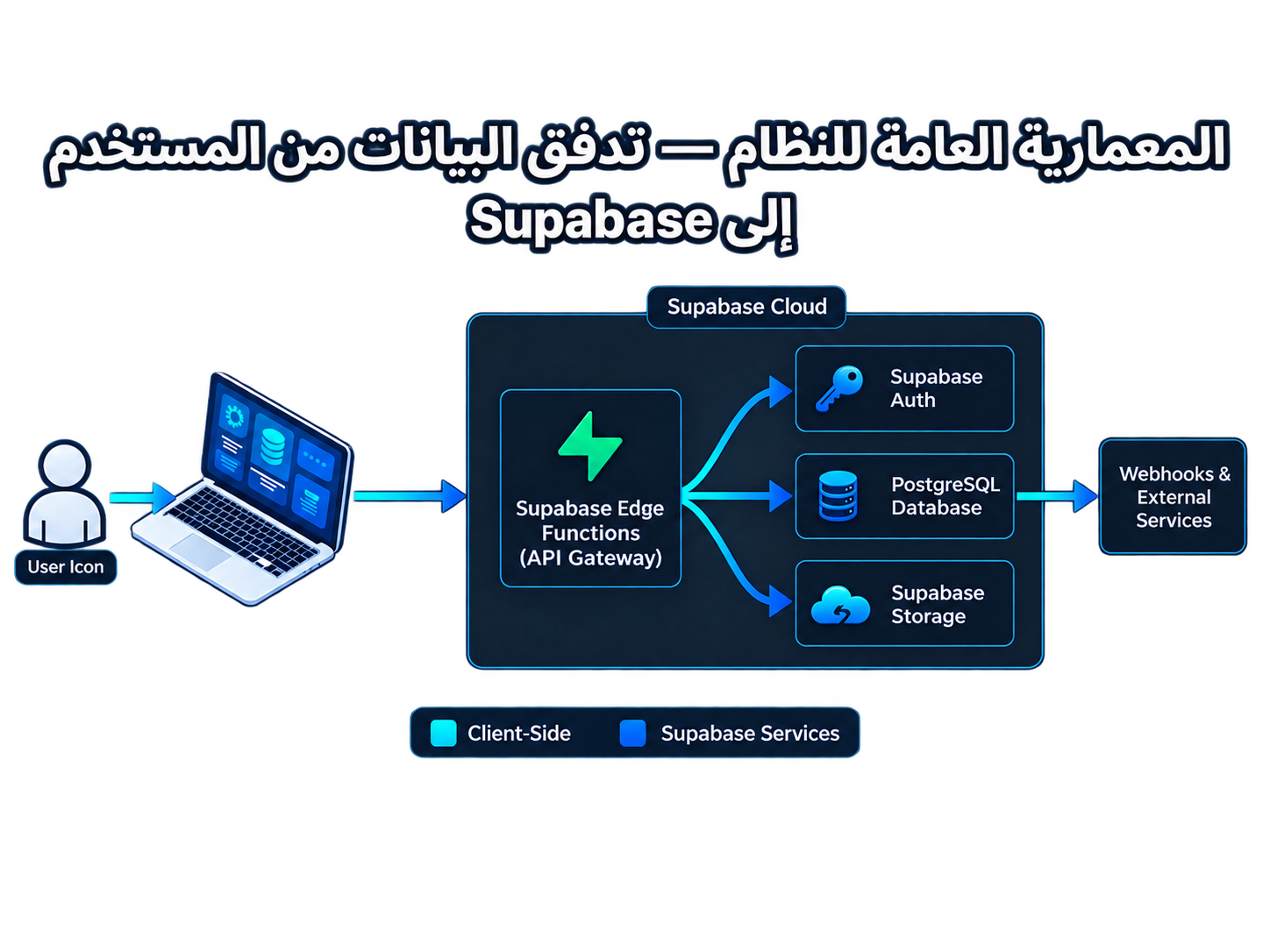
The major components include:
A managed PostgreSQL relational database.
User registration, login, identity, and session management.
Fine-grained access control directly inside PostgreSQL.
File and media management through Buckets.
Live updates through persistent connections.
Server-side functions for secure backend logic.
Together, these services form a complete application backend.
At the core of Supabase is PostgreSQL, one of the most widely used relational database systems.
It organizes data into:
Tables
Rows
Columns
Primary Keys
Foreign Keys
Relationships
For example, an e-commerce system may contain:
Users → Orders → Order Items → Products → Payments
Each table stores a different type of information while relationships connect the data.
Supabase also provides visual database management tools that allow developers to create tables, define column types, build relationships, and insert data.
For example, an orders table may contain a user_id foreign key that connects every order to the user who created it.
This relational structure helps developers maintain organized, consistent, and traceable data.
Most applications need to know who is using the system.
Supabase provides an integrated Authentication service that supports user registration, login, logout, and session management.
Supported authentication approaches include:
Email and password
Magic Link
OAuth
JSON Web Tokens (JWT)
A simplified authentication flow works as follows:
The user creates an account.
The user logs in.
The platform validates the credentials.
A JWT is issued.
The JWT is included with future requests.
Backend security policies use the authenticated identity to determine what the user is allowed to access.
Supabase can therefore connect authentication directly to database authorization rules.
Authentication alone does not guarantee proper data isolation.
Imagine an online store where User A and User B both have accounts.
User A should not be able to read User B's private orders simply because both users are authenticated.
This is where Row Level Security (RLS) becomes important.
RLS allows security policies to be defined at the individual row level inside PostgreSQL.
For example, a policy may enforce:
auth.uid() = user_idThis means the authenticated user's ID must match the user_id stored in the row.
If User A requests all orders, the database automatically returns only the rows belonging to User A.
Even if the client application attempts to request unauthorized data, the server-side policy still applies.
A typical policy can look like:
ALTER TABLE orders ENABLE ROW LEVEL SECURITY;

CREATE POLICY "own_orders_select"
ON orders
FOR SELECT
USING (auth.uid() = user_id);
This makes RLS one of the most important security mechanisms when designing applications with Supabase.
Applications rarely work with database records alone.
They often need to manage files such as:
Profile images
Product images
Documents
Chat attachments
Article images
User uploads
Supabase provides Storage for managing these files.
Files are organized into containers called Buckets.
A Bucket can be:
Suitable for content that anyone may access, such as public product images.
Example:
product_images
Suitable for files that should only be accessible to authorized users.
Examples:
avatars
chat_attachments
Supabase Storage can also be combined with access-control policies, allowing applications to define exactly who may upload, read, update, or delete stored files.
Some applications need to receive updates immediately when data changes.
A chat application is a simple example.
When one user sends a new message, other users should see it immediately without refreshing the page.
Supabase provides Realtime functionality for this type of interaction.
It can be used for:
Chat systems
Live dashboards
Instant notifications
Order tracking
Collaboration systems
Monitoring interfaces
A typical realtime flow might be:
User A creates a new message.
PostgreSQL receives the new record.
Supabase Realtime detects the event.
The update is broadcast.
Users B and C receive the new message immediately.
This communication typically relies on persistent connections such as WebSockets.
Some business operations should never run directly inside the browser.
Examples include:
Processing payments
Calling external services with secret API keys
Sending notifications
Performing sensitive validation
Executing protected calculations
Integrating with third-party systems
Supabase provides Edge Functions for this purpose.
Edge Functions are lightweight server-side functions that can be called through HTTP.
They allow developers to move sensitive logic away from the frontend and execute it in a more secure backend environment.
Common use cases include:
Connecting to payment providers and validating transactions.
Sending emails, SMS messages, or application notifications.
Connecting securely to third-party APIs.
Executing logic that should not be exposed to the client.
Edge Functions integrate with Supabase services such as authentication, databases, and storage.
API credentials must be handled carefully.
Supabase uses different types of keys and connection credentials for different purposes.
Designed for client-side use.
It can be used by:
Web applications
Mobile applications
Frontend code
Its effective access should be controlled through authentication and security policies such as RLS.
Used only in secure backend environments.
Examples include:
Server-side applications
Secure backend services
Edge Functions
It should never be exposed inside frontend code.
Used for direct database access through administrative tools and database clients.
Because it may provide elevated database access, it should be treated as sensitive information.
The core security principle is simple:
Never place secret credentials, administrative connection strings, or privileged backend keys inside public frontend code.
The presentation emphasizes that the publishable key belongs on the frontend, while privileged credentials must remain in secure backend contexts.
A simplified Supabase application architecture can be represented as:
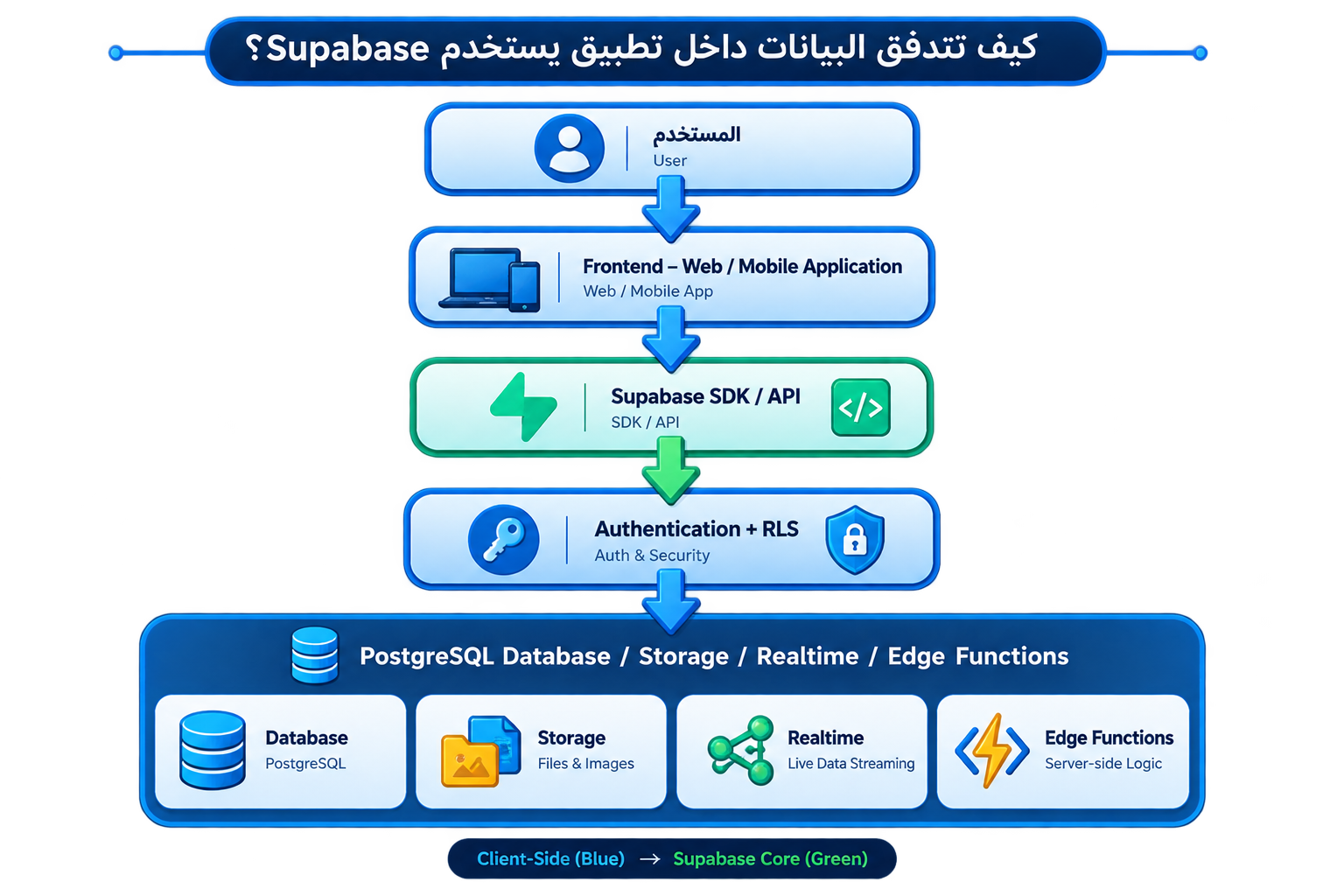
The user first interacts with the frontend.
The frontend sends requests through the Supabase SDK or API.
Supabase identifies the user and applies authorization rules.
The request is then processed by the appropriate backend service.
This may include:
Reading or writing database records
Uploading files
Receiving realtime updates
Executing an Edge Function
This architecture allows developers to build complete applications without manually creating a traditional backend server for every basic capability.
Supabase can support many different application architectures.
An online store can use:
Auth for customer accounts.
PostgreSQL for products, orders, and payments.
RLS so customers only see their own orders.
Storage for product images and avatars.
Edge Functions for payment processing.
Realtime for live order-status updates.
A possible data model could be:
Users → Orders → Order Items → Products
and:
Orders → Payments
This example is included in the training material as one of the main practical Supabase scenarios.
A messaging platform can use:
Auth to identify users.
PostgreSQL to store conversations and messages.
Realtime to deliver messages instantly.
Storage for attachments.
RLS to ensure users only read conversations they belong to.
Edge Functions for notifications.
A possible schema is:
Users → Conversations → Messages → Attachments
with additional notification records linked to messages.
This scenario demonstrates how Realtime, Storage, security, and server-side functionality can work together.
Supabase can also support applications where many organizations share one system while their data remains isolated.
For example, an education platform may contain multiple schools.
Each school may have:
Students
Teachers
Courses
Enrollments
RLS can enforce rules ensuring that students and teachers only access data belonging to their own school.
This design pattern is known as multi-tenancy.
It allows several organizations to use the same application while maintaining logical separation between their data.
A publishing platform could include:
Authors
Articles
Categories
Attachments
Publishers
RLS policies can distinguish between drafts and published content.
For example:
Authors may see their own drafts.
Publishers may manage publishing workflows.
Public users may only access published articles.
Storage can manage article images and attachments, while automation can trigger notifications when content is published.
Modern development environments are increasingly integrating AI agents into development workflows.
The Model Context Protocol (MCP) provides a standardized way for AI systems to connect to external tools and data sources.
With a Supabase MCP integration, an AI development agent can potentially interact with a Supabase project to assist with tasks such as:
Understanding the database schema.
Inspecting table relationships.
Generating SQL queries.
Creating migrations.
Reviewing RLS policies.
Working with indexes.
Investigating backend issues.
Managing aspects of the backend using natural-language instructions.
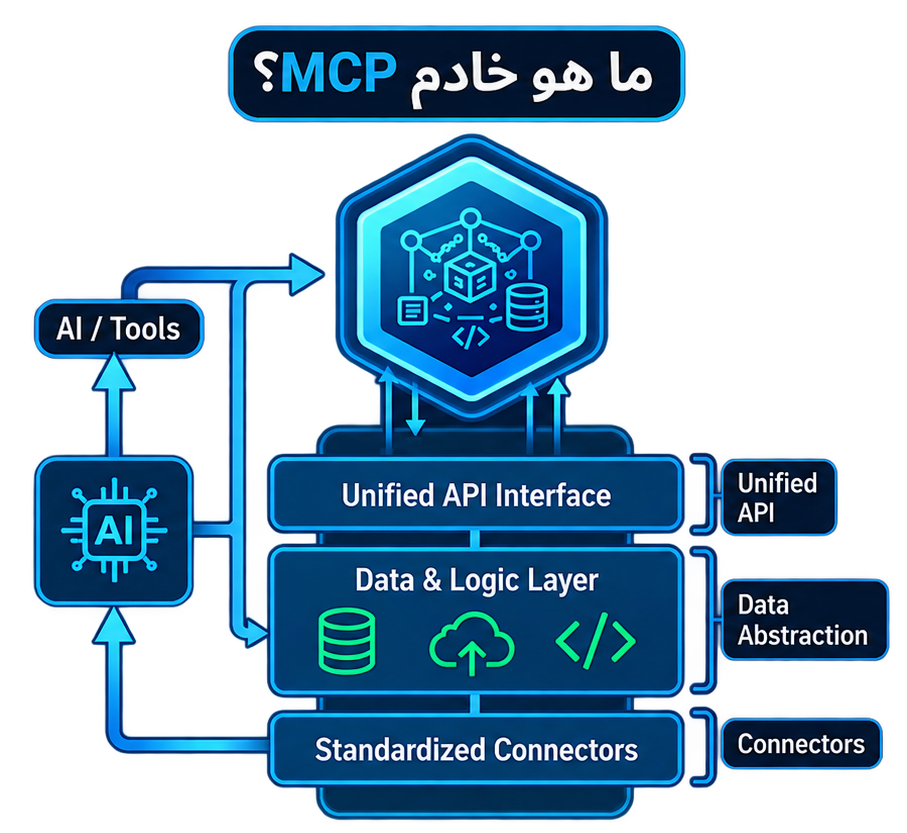
The source presentation also stresses that privileged access, especially service-level credentials, should be handled carefully when connecting AI tools to production environments.
A practical implementation process can follow these steps:
Sign in to the Sohobcom Supabase dashboard.
Select or create a project.
Review the API and database connection information.
Design the database schema and relationships.
Create the required tables.
Insert sample data for testing.
Enable RLS.
Create SELECT, INSERT, UPDATE, and DELETE policies.
Configure Authentication.
Create test users.
Create the required Storage Buckets.
Configure Bucket privacy.
Enable Realtime where required.
Plan and implement Edge Functions.
Test the application using different user accounts.
Verify that every user can access only the appropriate data and operations.
The presentation provides a similar staged workflow covering project creation, schema design, RLS, Auth, Storage, Realtime, Edge Functions, testing, and evaluation.
Supabase on Sohobcom brings several backend capabilities together within one environment.
Developers can work with:
Database + Authentication + RLS + Storage + Realtime + Edge Functions
instead of manually building every backend capability from the ground up.
This allows technical teams to spend more time on:
Application features
User experience
Business requirements
Product validation
Customer value
and less time on repetitive infrastructure and backend setup.
The training material specifically positions Sohobcom-hosted Supabase as a way to combine the Supabase development model with locally managed hosting and data-sovereignty considerations.
Building a modern backend no longer requires creating every component from scratch.
Backend as a Service platforms provide reusable backend capabilities that allow teams to develop applications faster while maintaining structured data management, authentication, security, storage, and realtime functionality.
Be the first to rate this article
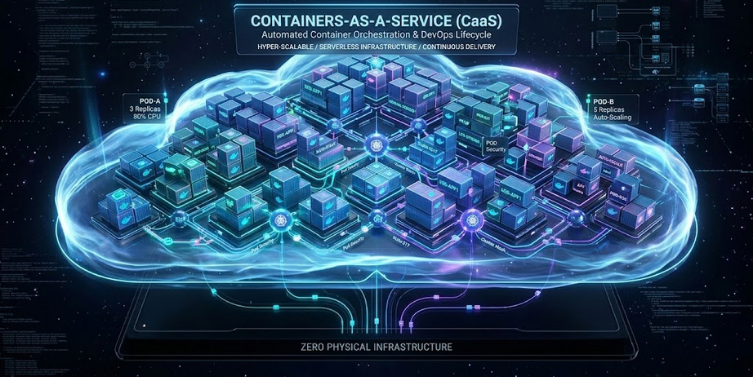
Containers as a Service (CaaS) is an advanced cloud computing model. This technology enables developers and operations teams to deploy and manage containerized applications using popular build tools such as Docker. It also relies on advanced orchestration and automation engines such as Kubernetes to manage these containers and their clusters, and to scale them automatically as needed. Thus, the platform relieves organizations of the complexities of managing physical infrastructure, enabling them to focus entirely on software development efficiently and securely.
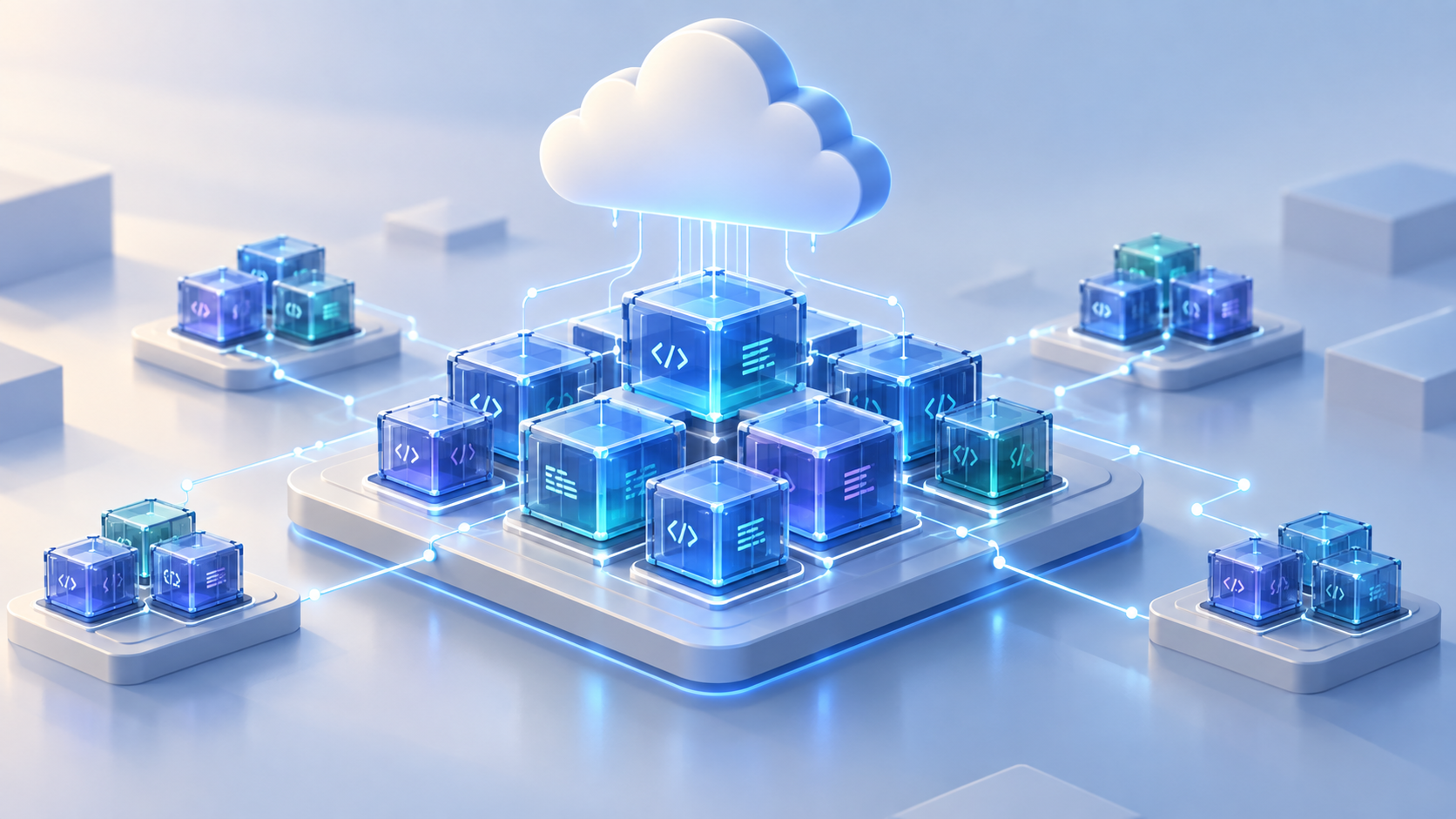
Discover how Containers as a Service (CaaS) lets you deploy and scale applications without managing servers—and when to choose it over VMs or serverless functions.
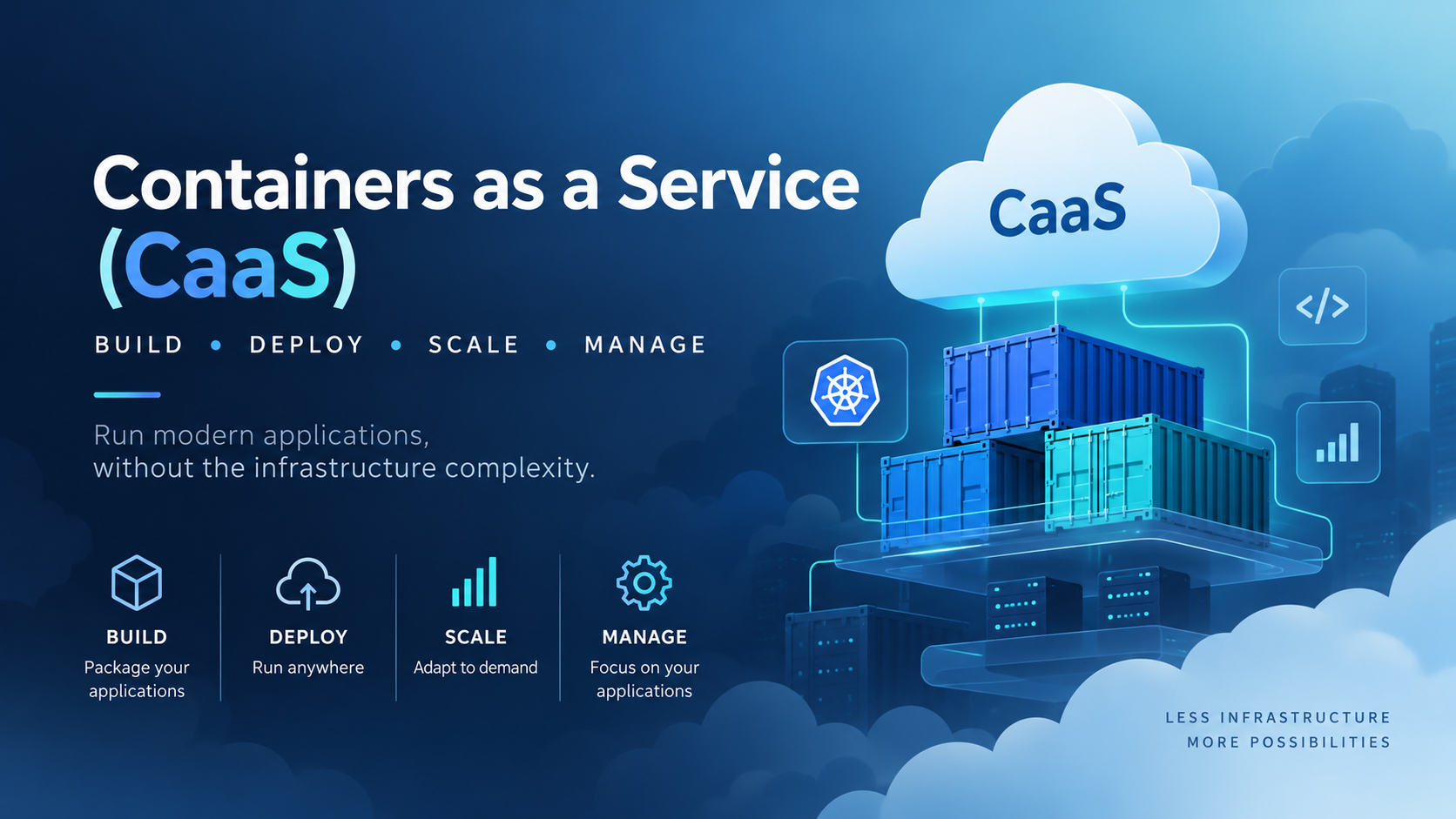
تعرّف على Containers as a Service (CaaS)، وكيف تعمل الحاويات وإدارة التطبيقات والتوسع التلقائي، وما الفرق بين CaaS وIaaS وPaaS وFaaS.