أمن السحابة والامتثال
3 min readBack to blog

One of the most common misconceptions we constantly hear when designing network architectures and securing services is: "We already have a robust Next-Generation Firewall (NGFW), so why do we need a WAF?".
The answer simply comes down to the nature of the traffic. A traditional firewall operates on IP addresses and ports at Layers 3 and 4. Even with features like IPS and Deep Packet Inspection in NGFW appliances, they are primarily designed to match broad signatures and block network-level protocol exploits—leaving them blind to the internal application logic of web services. When an HTTP/HTTPS request passes through port 443 with a structurally valid network packet, the firewall will permit it without issue, even if that payload carries a malicious query targeting the database or exploiting a flaw in the application code.
Where does the WAF step into the data path?
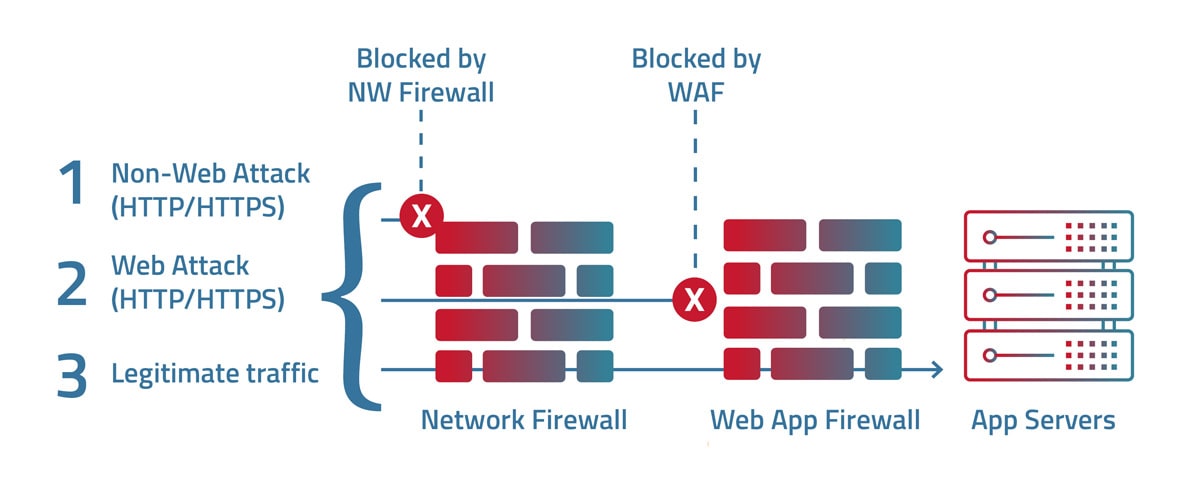
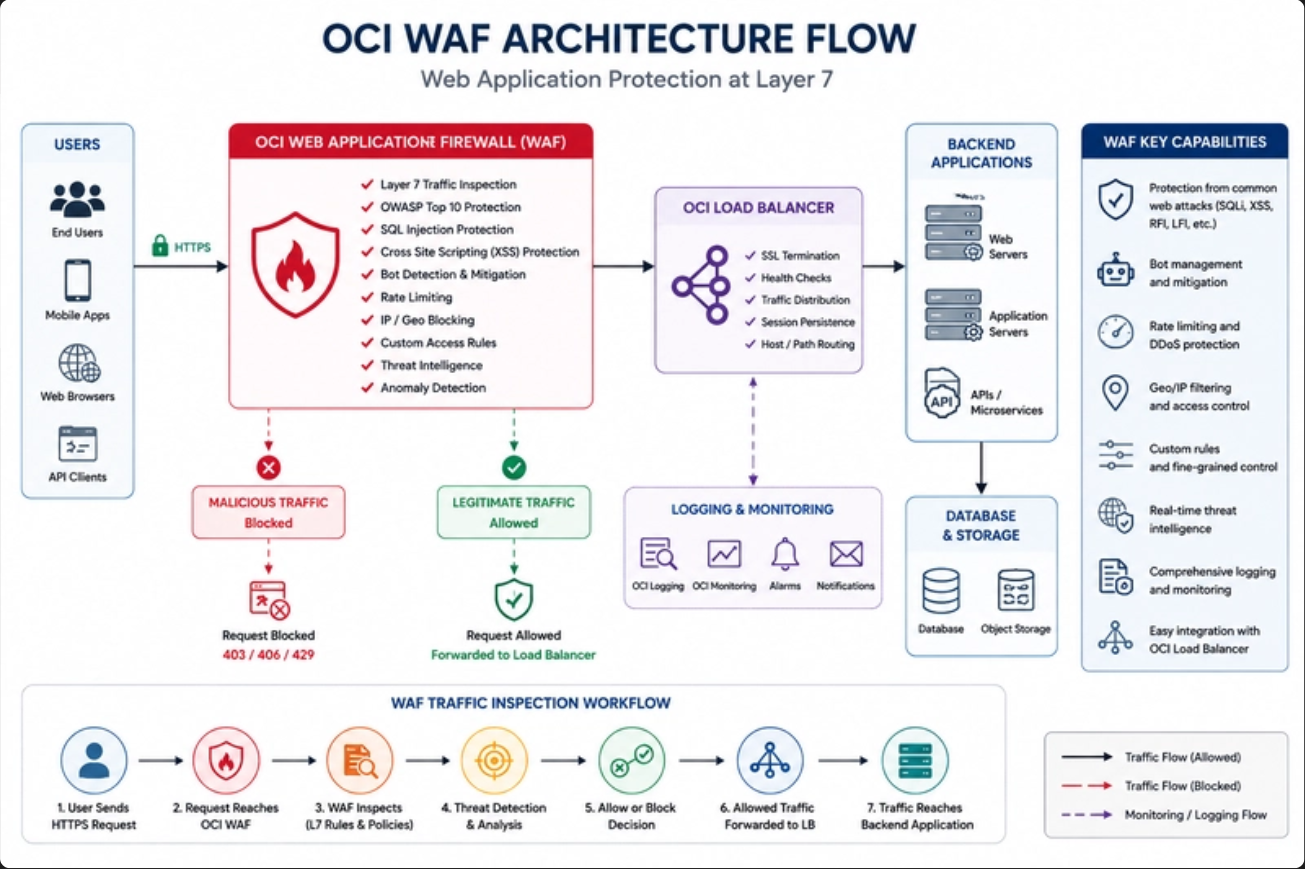
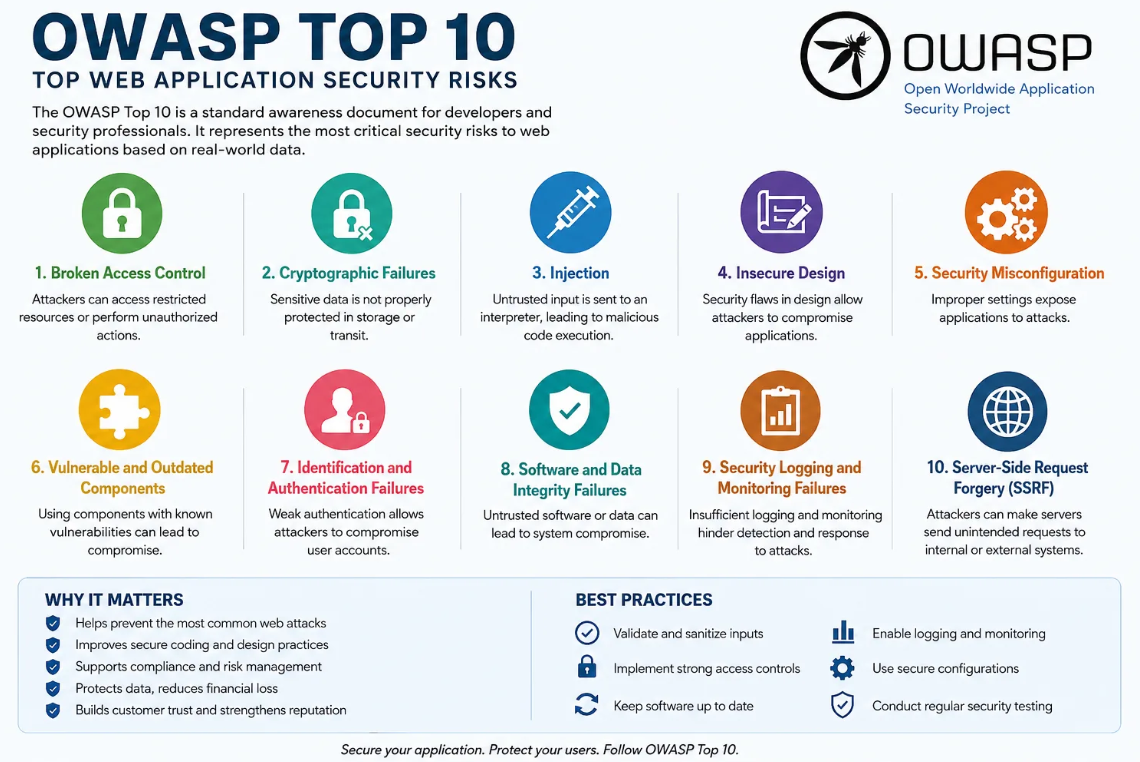
A Web Application Firewall (WAF) operates at Layer 7 (the Application Layer). Its role goes beyond merely passing or dropping packets; it completely dissects the HTTP request, inspecting headers, cookies, and input payloads for web-targeted attack patterns such as SQLi, Cross-Site Scripting (XSS), and API exploit attempts aimed at token harvesting.
In practical implementation, engineers rely on two core models for rule tuning:
Negative Security Model: Relies on predefined attack signatures to block known malicious patterns. While easier to deploy initially, it offers no protection against zero-day vulnerabilities.
Positive Security Model: The most robust security approach, yet the most challenging to implement. It defines strictly permitted paths and explicit input data types, rejecting any value outside that baseline.
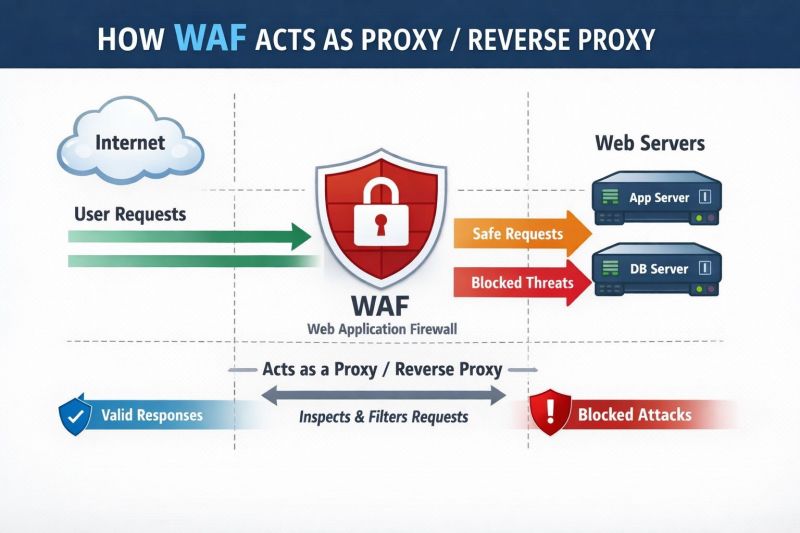
Selecting a deployment model is not solely about security; it is equally governed by infrastructure architecture and permissible latency tolerance:
Inline Reverse Proxy Mode: The WAF sits directly in front of web servers to terminate SSL/TLS sessions, decrypt and inspect payloads, and then forward scrubbed, clean traffic to backend servers. While this is the most effective approach for real-time blocking, it strictly requires a High Availability (HA) design to eliminate the risk of introducing a Single Point of Failure (SPOF).
Out-of-Path / Mirror Mode: Traffic is ingested passively via a SPAN or TAP port. This method is ideal for monitoring and analysis without introducing latency, though it inherently lacks the capability to block threats in real time.
Cloud-based WAF: Traffic is rerouted by steering DNS records through the provider's cloud network. It serves as an agile, highly effective countermeasure against volumetric Layer 7 DDoS attacks, though it introduces trade-offs regarding data sovereignty and third-party dependency.
From hands-on experience, the greatest challenge facing a network and security engineer is not the physical appliance installation or initial service provisioning, but the fine-tuning phase and mitigating false positives. Enabling automatic blocking mode from day one is a critical mistake that can easily disrupt legitimate customer transactions.
Best practice dictates running the WAF in monitoring or detection-only mode for at least two weeks to baseline normal traffic patterns, meticulously whitelist benign paths and parameters, and then transition gradually into active blocking. Furthermore, a WAF serves as an indispensable tool for implementing virtual patching; when a severe zero-day vulnerability is exposed in application code, a single targeted WAF rule can immediately shield the attack surface while developers remediate, test, and deploy the patched codebase to production.
Be the first to rate this article

A clear guide to how a Web Application Firewall protects websites and APIs from attacks, bots, abusive behavior, data exposure, and downtime.

This deep dive exposes what actually happens under the hood when a WAF encounters malicious traffic in the wild. From post-TLS HTTP dissection and cumulative anomaly scoring engines down to the exact normalization flaws attackers exploit to bypass detection, this guide breaks down how decisions are made, where the logic fails, and how to tune your defenses without shooting your own production traffic in the foot—an uncompromising, engineering-first playbook for real-world application defense.
A realistic engineering perspective on hosting server and network infrastructure in colocation data centers—covering power and cooling standards, network connectivity, uplinks, and field best practices for rack management and service continuity.