What Is a Web Application Firewall (WAF), and How Does It Work?
How Does Your Website Protect Against Attacks That Come Through Legitimate Doors?#
When the Attack Comes Through the Open Door#
Imagine the night of a major marketing campaign launch for an e-commerce store. Real visitors are pouring in, orders are increasing, and the technical team is monitoring the system’s performance. Then, unusual indicators begin to appear: strange queries in search fields, repeated requests to sensitive pages, and attempts to access data that no visitor should be able to see.
At this point, one question may seem confusing: If we already have a firewall on the server, how did the attack get through?
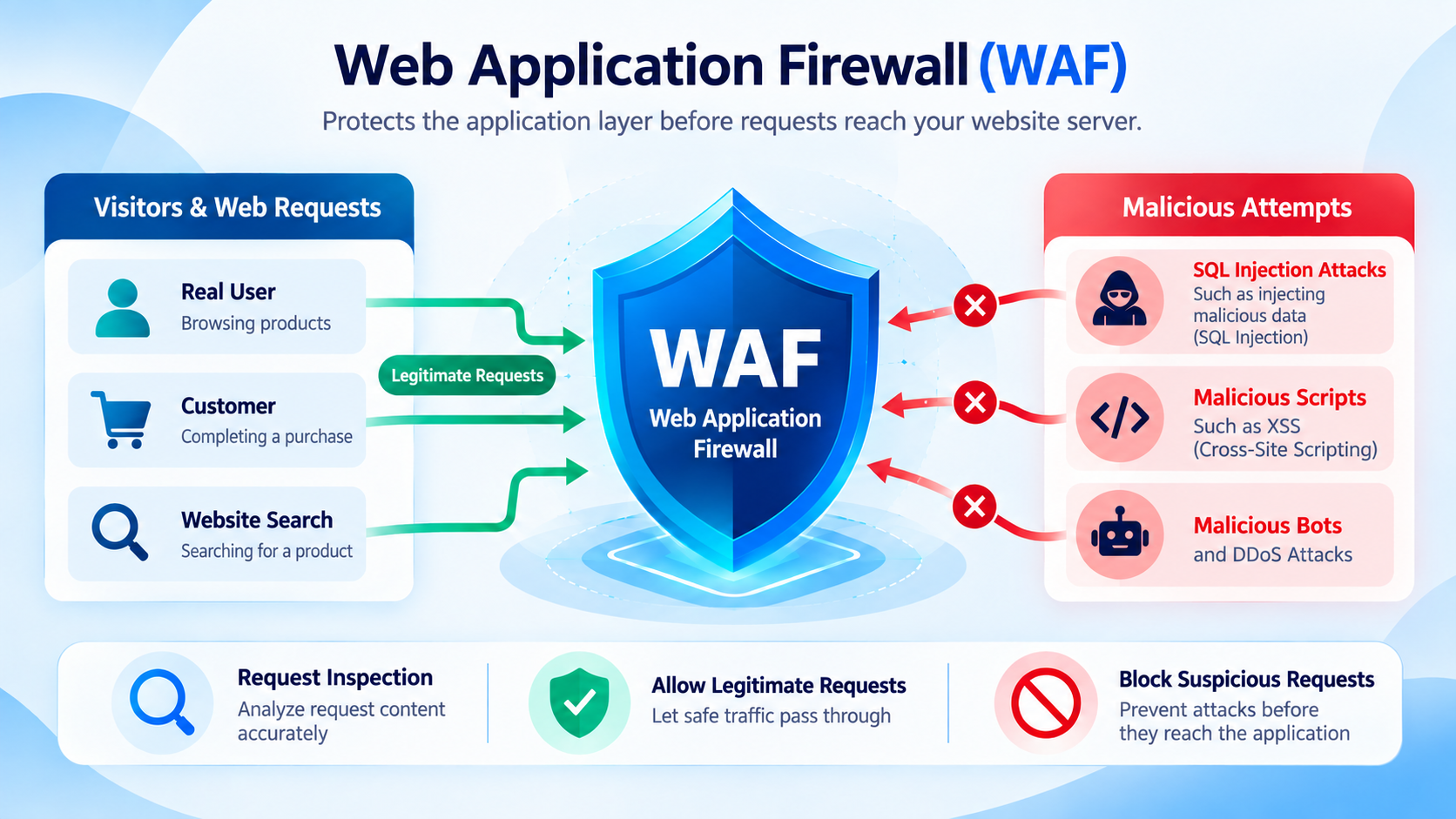
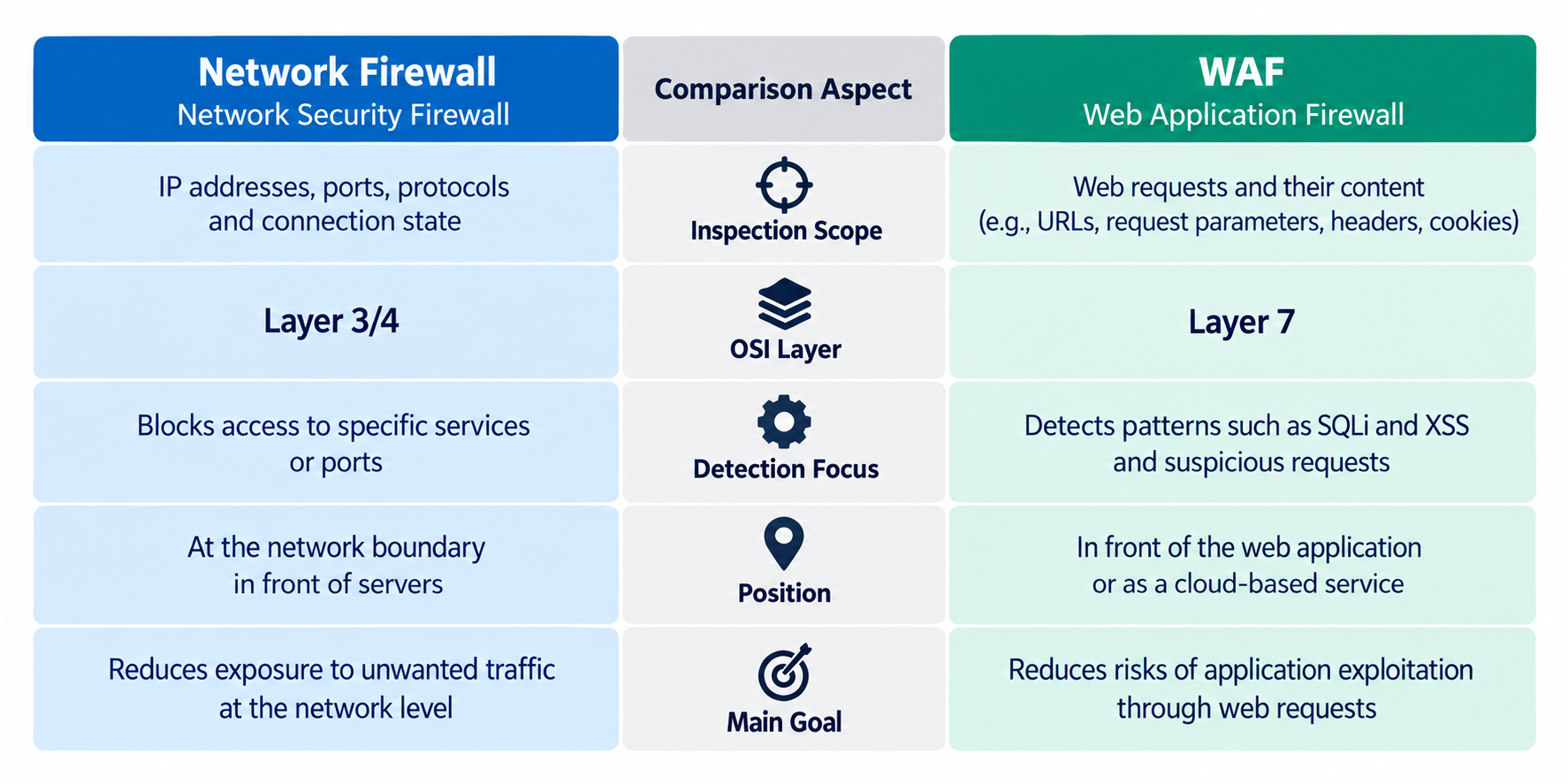
The answer lies in the different roles of each security layer. A network firewall primarily focuses on traffic at the network level, including ports and protocols, while a WAF focuses on understanding and inspecting web application requests themselves.
Put simply: the door may be open because legitimate customers need to use it, but that does not mean everything coming through the door is safe. The role of a WAF is to inspect what visitors are requesting from the application and attempt to block known attack patterns or suspicious behavior before those requests reach the application.
What Is a WAF?#
A Web Application Firewall (WAF) is a security layer placed in front of a web application to monitor and analyze HTTP/HTTPS requests according to defined security rules and policies.
The goal is not to prevent access to the website altogether, but rather to distinguish between legitimate requests and requests that contain indicators of vulnerability exploitation or malicious automated behavior.
Three Common Attacks a WAF Can Help Protect Against#
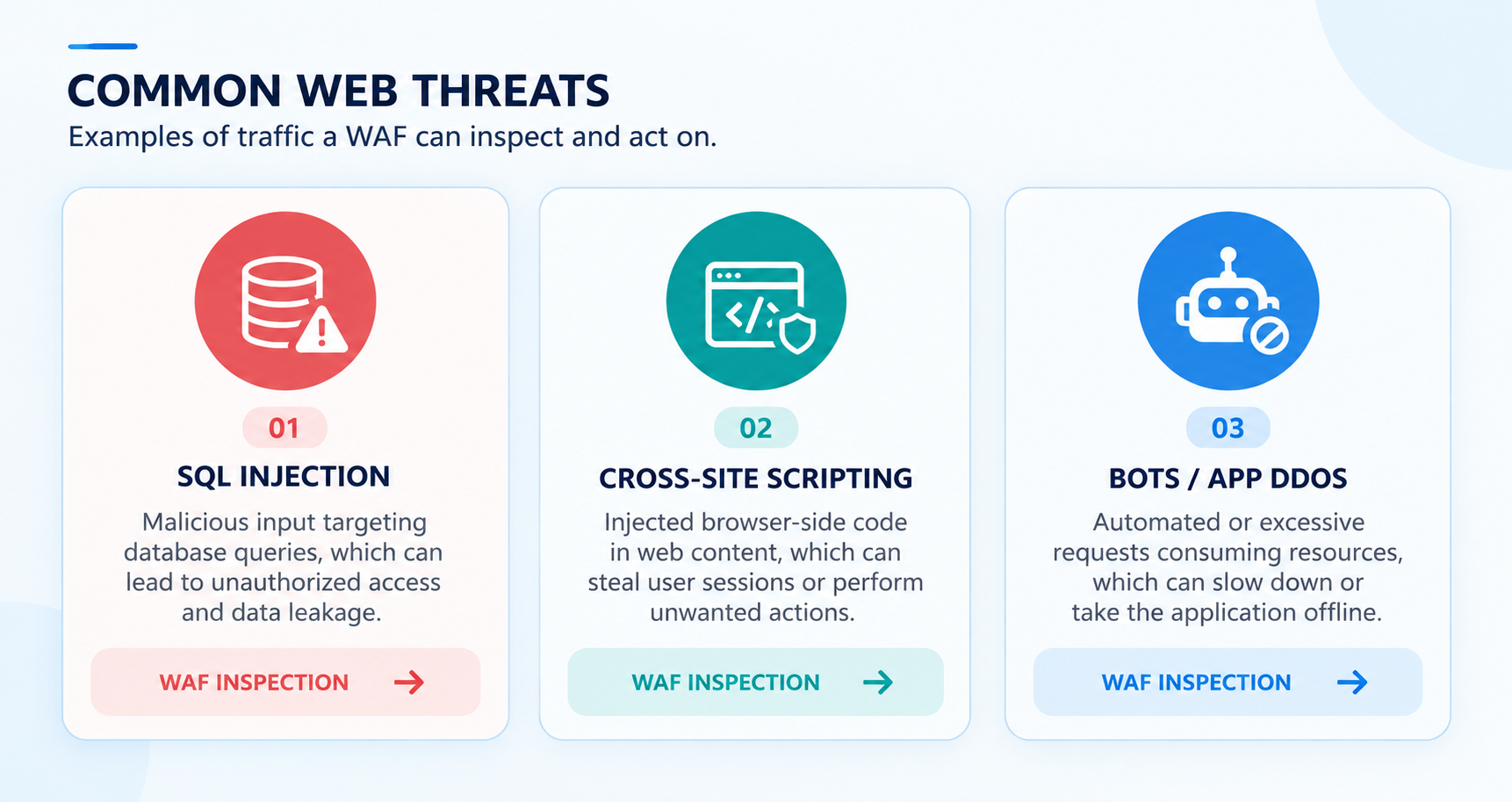
A WAF is not a replacement for secure software development, but it can provide an additional layer of defense against a range of attacks that exploit application inputs. Some of the most common examples include:
01. SQL Injection#
SQL Injection occurs when untrusted user input is handled in a way that allows an attacker to influence a database query. If an application builds database queries insecurely, exploitation may allow an attacker to read or modify data or perform unauthorized operations on the database.
A WAF can identify known patterns in incoming requests and block certain attempts before they reach the application. However, the primary protection must begin at the code level, particularly through the use of Parameterized Queries, which separate user-supplied data from SQL commands.
02. Cross-Site Scripting (XSS)#
In an XSS attack, an attacker attempts to inject malicious script content into a trusted web page so that the script is executed by another user's browser when the page is displayed.
Depending on the nature of the vulnerability and the application context, this could result in the theft of session data or the execution of actions on behalf of the user.
Some WAF rules can detect known XSS patterns and reduce the likelihood of malicious payloads reaching the application. However, a WAF alone does not address the root cause of the vulnerability. Contextual Output Encoding, appropriate input validation, Content Security Policy (CSP), and secure code review remain important components of an effective security strategy.
03. Malicious Bots and Application-Level Flooding Attacks#
Not all automated traffic is malicious. Search engines and monitoring services use bots for legitimate purposes. The problem arises when an automated source sends a large number of requests or repeatedly targets resource-intensive application functions in a way that consumes system resources.
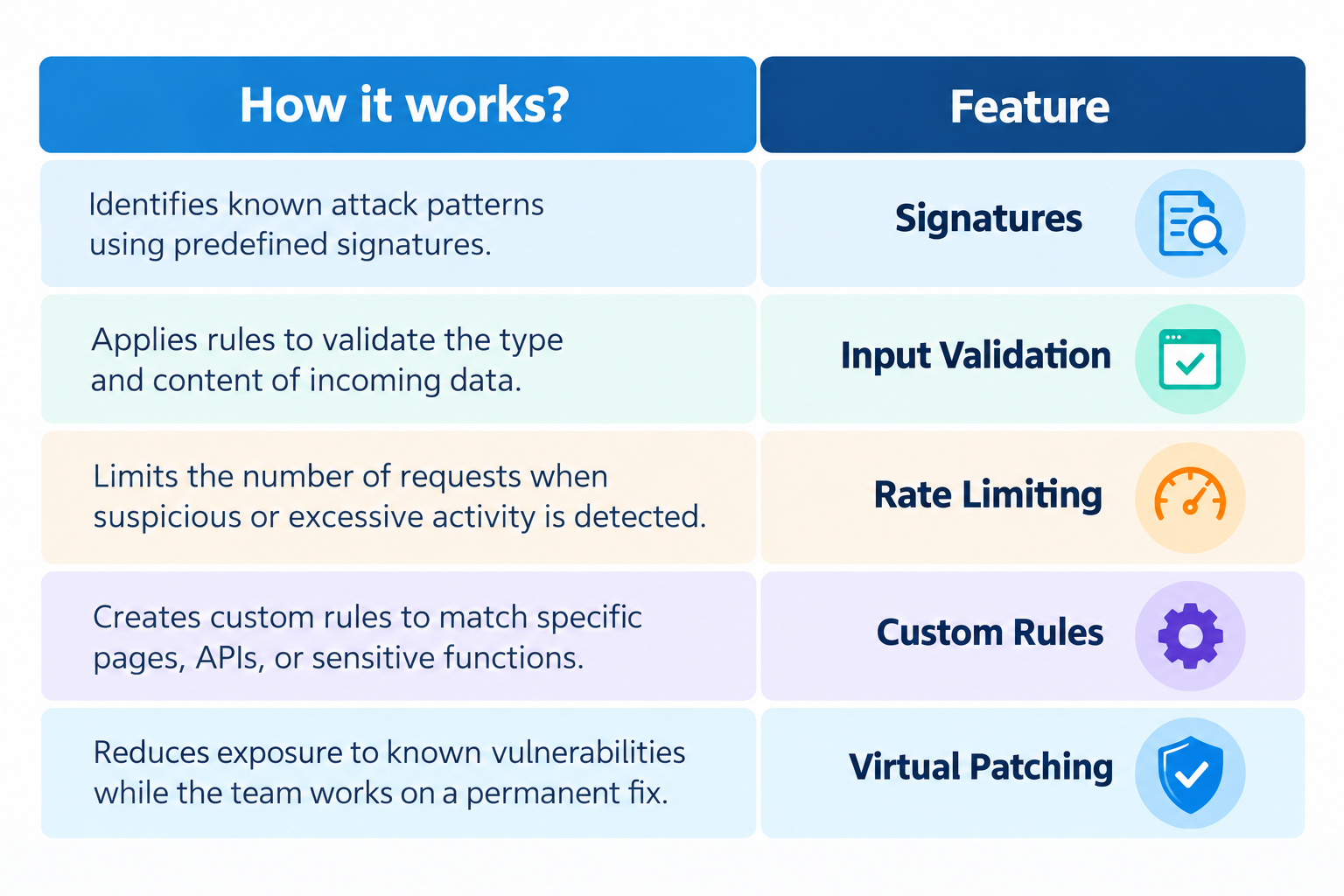
Modern WAF solutions can use Rate Limiting, behavioral rules, and additional verification mechanisms to distinguish normal usage patterns from suspicious automated activity.
Large-scale DDoS attacks, however, typically require additional specialized protection layers. A WAF alone should not be considered sufficient protection against such attacks.
How Does a WAF Make Its Decision?#
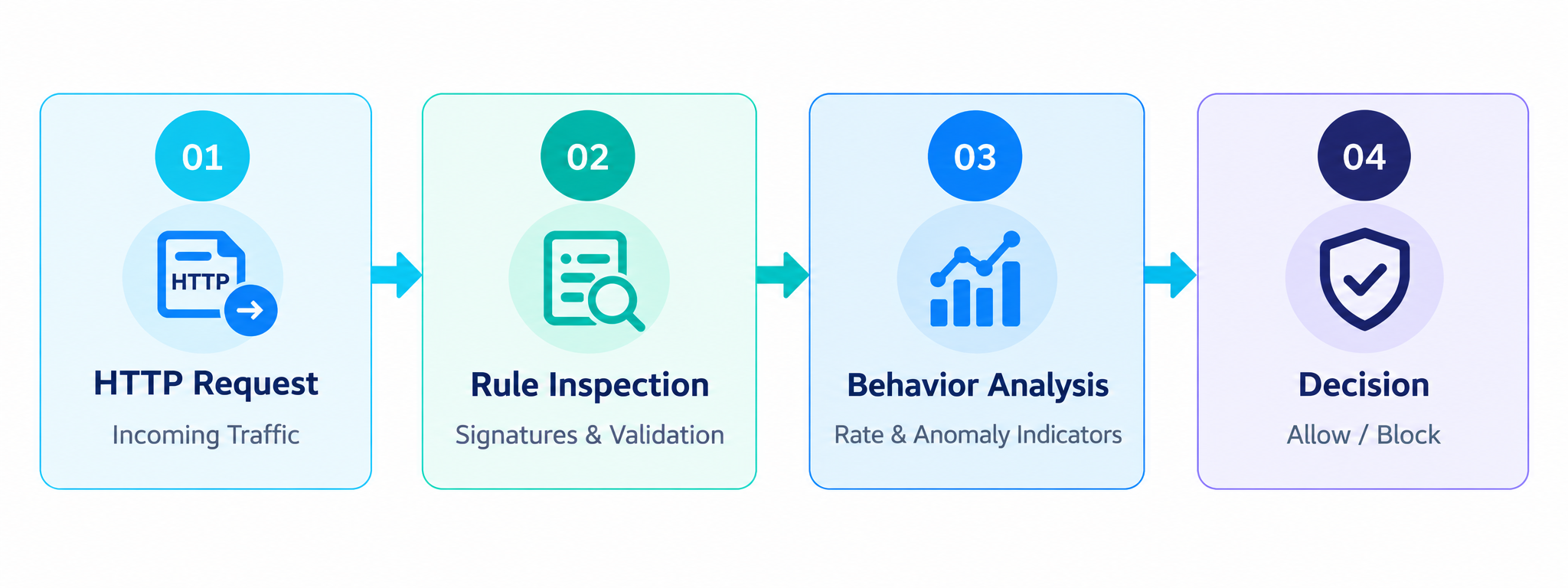
The journey of a web request through a WAF can be simplified into four stages:
Receive the request → Inspect it → Make a decision → Forward it to the application if it passes the security policies
The exact details vary depending on the WAF product and deployment model, but this simplified process helps illustrate how the technology works.
What Does a WAF Deliver for an Organization in Practice?#
• Reducing the attack surface at the web application layer by filtering some unwanted requests before they reach the application.
• Adding a monitoring and control layer in front of websites, e-commerce stores, and APIs.
• Helping protect application resources from certain patterns of automated or repeated requests through Rate Limiting and behavioral rules.
• Providing logs and security data that help security and technical teams understand recurring exploitation attempts.
• Supporting a defense-in-depth strategy when used alongside security updates, backups, access management, and security testing.
Conclusion#
A Web Application Firewall (WAF) is not simply another version of a traditional firewall. The fundamental difference lies in the level of visibility: a network firewall primarily deals with traffic at the network level, while a WAF focuses on understanding web application requests themselves and applying security policies to them.
If your website handles user logins, purchase requests, payments, personal data, or APIs, protecting the application layer becomes a natural part of effective risk management.
However, the strongest protection is achieved when a WAF operates as part of a defense-in-depth strategy, rather than being treated as a standalone solution.
Rate this article
Be the first to rate this article
Comments & Discussion0
Related articles
The Real Difference Between a Firewall and Antivirus Software  Cloud Security
The Real Difference Between a Firewall and Antivirus Software
Learn the difference between Firewalls and Antivirus Software, and why relying on a single security tool is not enough to protect your business and data in today’s digital world.
sohobcom