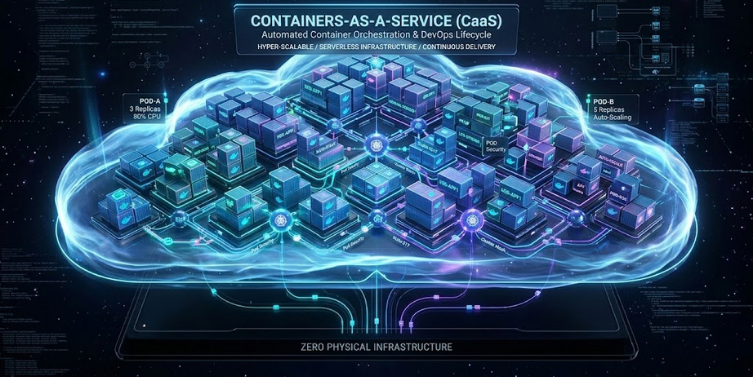
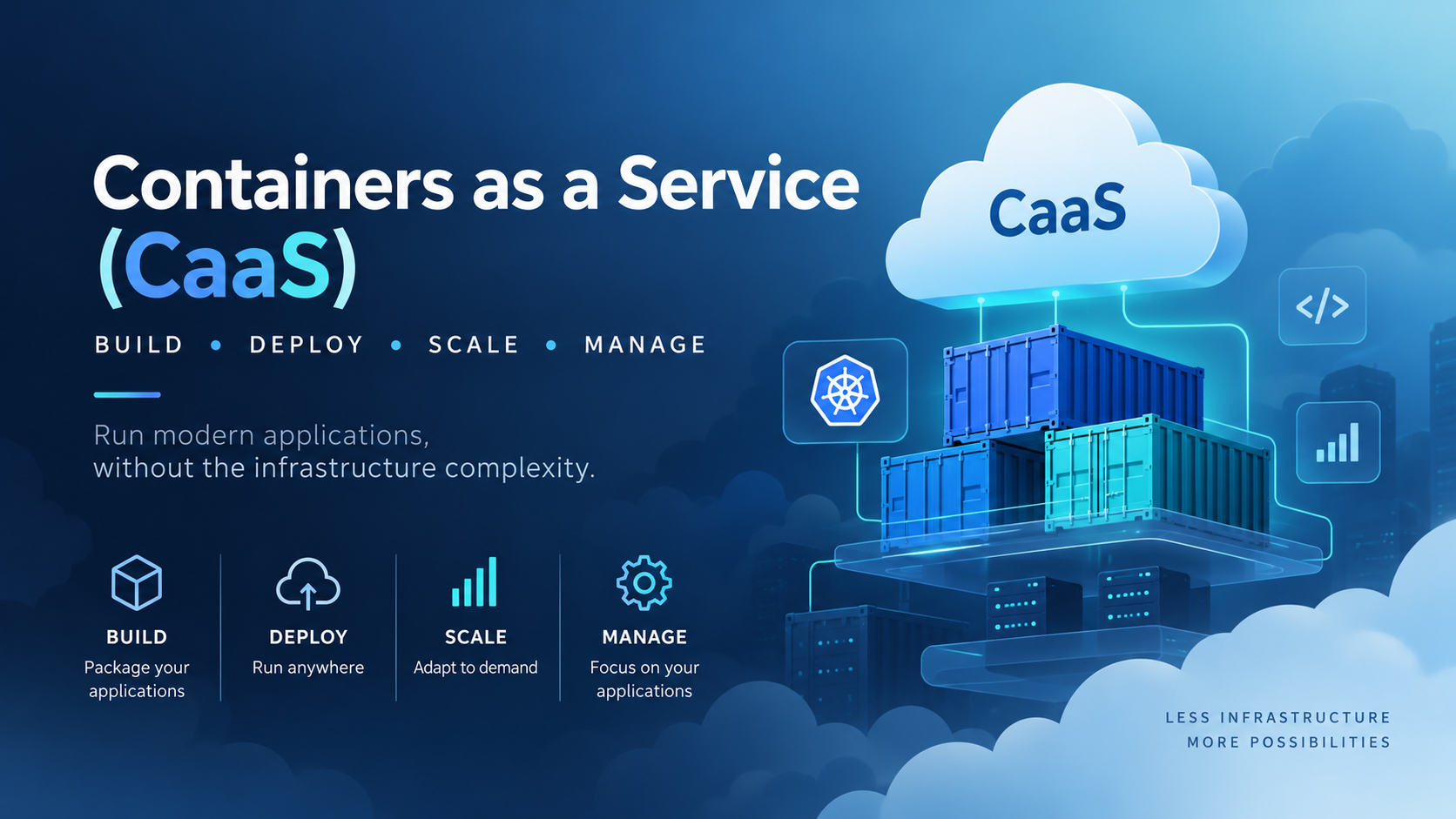
Containers as a Service (CaaS): What Is It and How Does It Work?
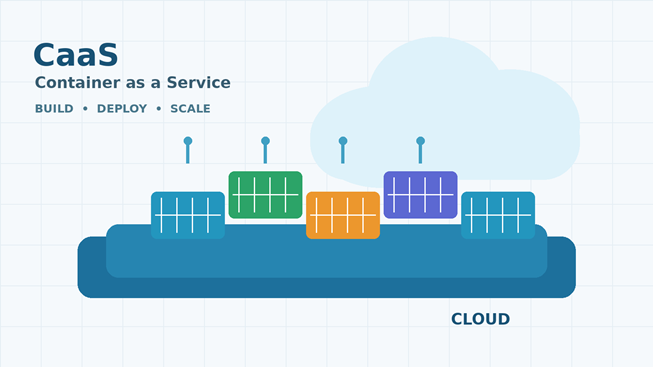
Before We Begin: The Problem Is Not the Container#
Imagine that a development team has finished building a new service. The code is ready, and the basic tests have passed, but the real questions begin now: Where will the service run? How will it be deployed? What happens if the number of users increases? Who will restart it if it fails? And how will the team know when performance begins to degrade?
Containers help standardize how an application is packaged and run. But when you have dozens or hundreds of containers, another layer of complexity emerges: scheduling, networking, load balancing, scaling, monitoring, and failure handling. This is where CaaS comes into play.
Why does this matter? Moving to containers is not an end in itself. The goal is to make the application development and operations lifecycle more repeatable and automated, while maintaining an appropriate level of control.
What Is CaaS?#
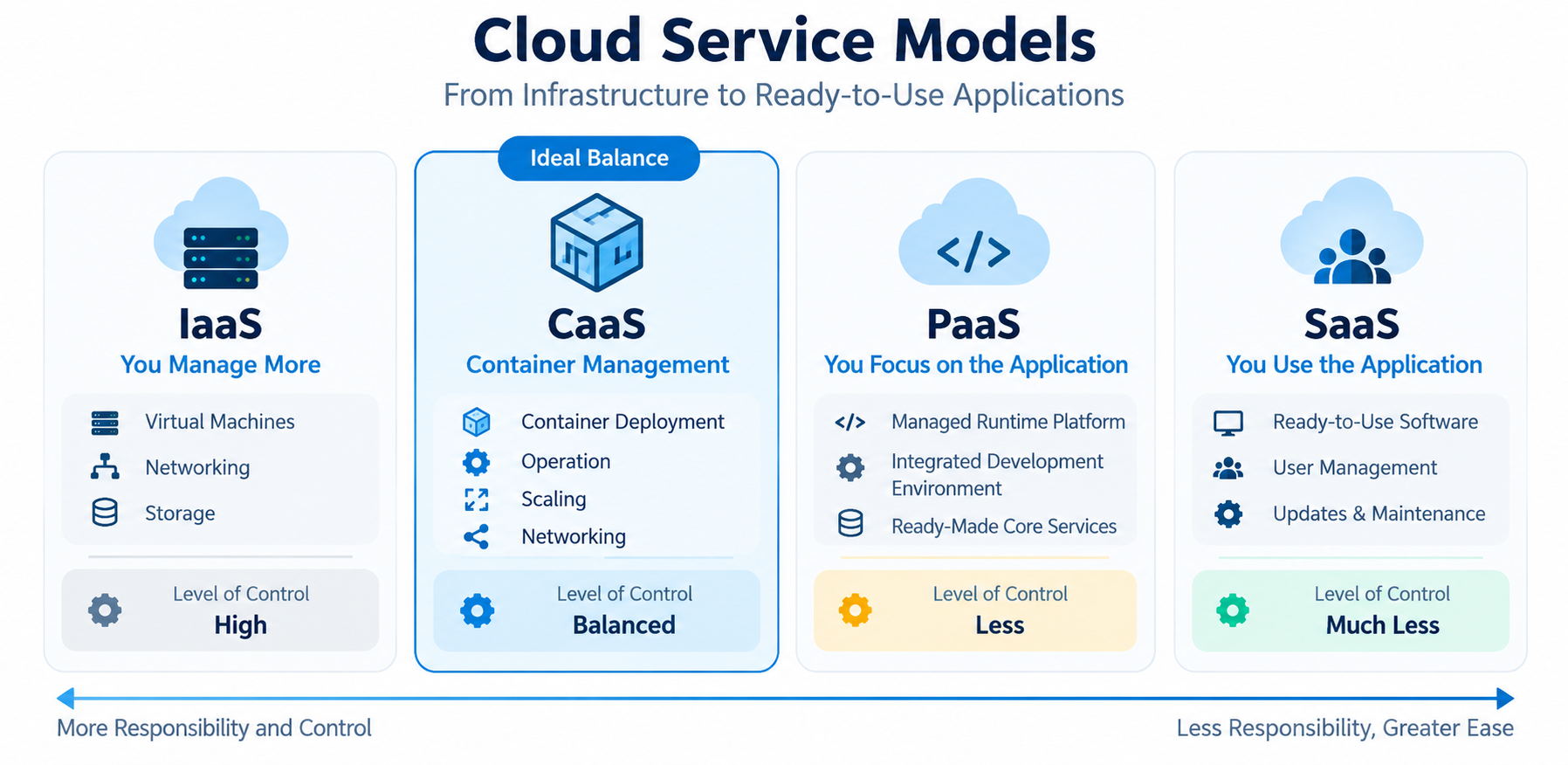
Containers as a Service (CaaS) is a service model that provides an environment for managing and deploying applications that run inside containers. The environment can be cloud-based or on-premises, depending on the architecture and platform being used.
In practice, the development team focuses on the application image and its runtime configuration, while the CaaS platform handles a range of container management functions such as deployment, scaling, networking, and health monitoring, depending on the level of management provided by the service provider or selected by the organization.
CaaS in the Right Context#
What Is a Container, Really?#
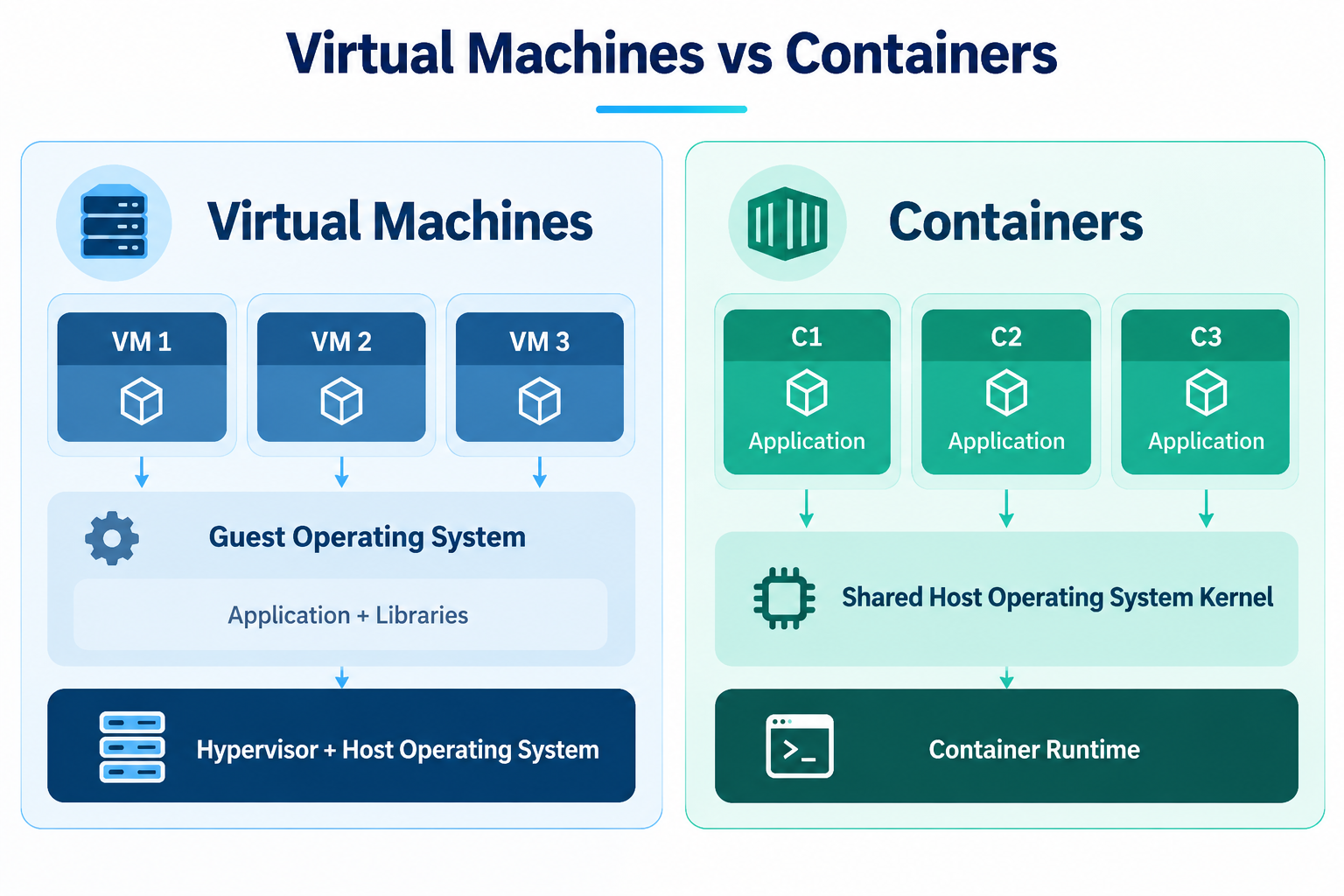
A container is a way of packaging an application together with its code, dependencies, and configuration files required to run it. The main benefit is reducing differences between environments, so moving an application from a developer’s machine to testing and then to production does not require a complete environment setup each time.
A container isolates the application as a running process within the host environment.
Containers are typically lighter than virtual machines because they do not require a full guest operating system for each application.
A container image can be built with a specific version and then used consistently across testing and deployment stages.
Containers are particularly well suited to DevOps, CI/CD, and distributed applications, but this does not automatically mean that every application should be transformed into microservices.
How Does CaaS Work, from Code to User?#
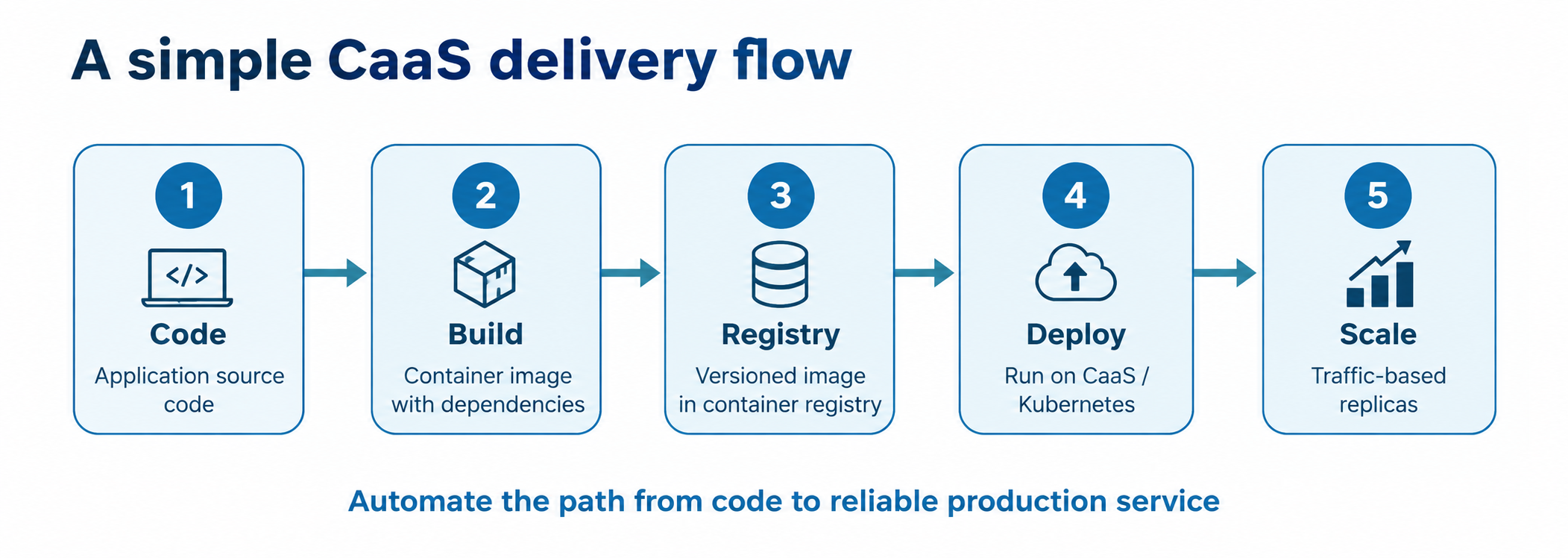
The best way to understand CaaS is to look at the application’s journey rather than memorizing technical terms. The journey begins with code and ends with an accessible service, with a series of build, storage, deployment, and monitoring processes in between.
Components That Make CaaS Useful#
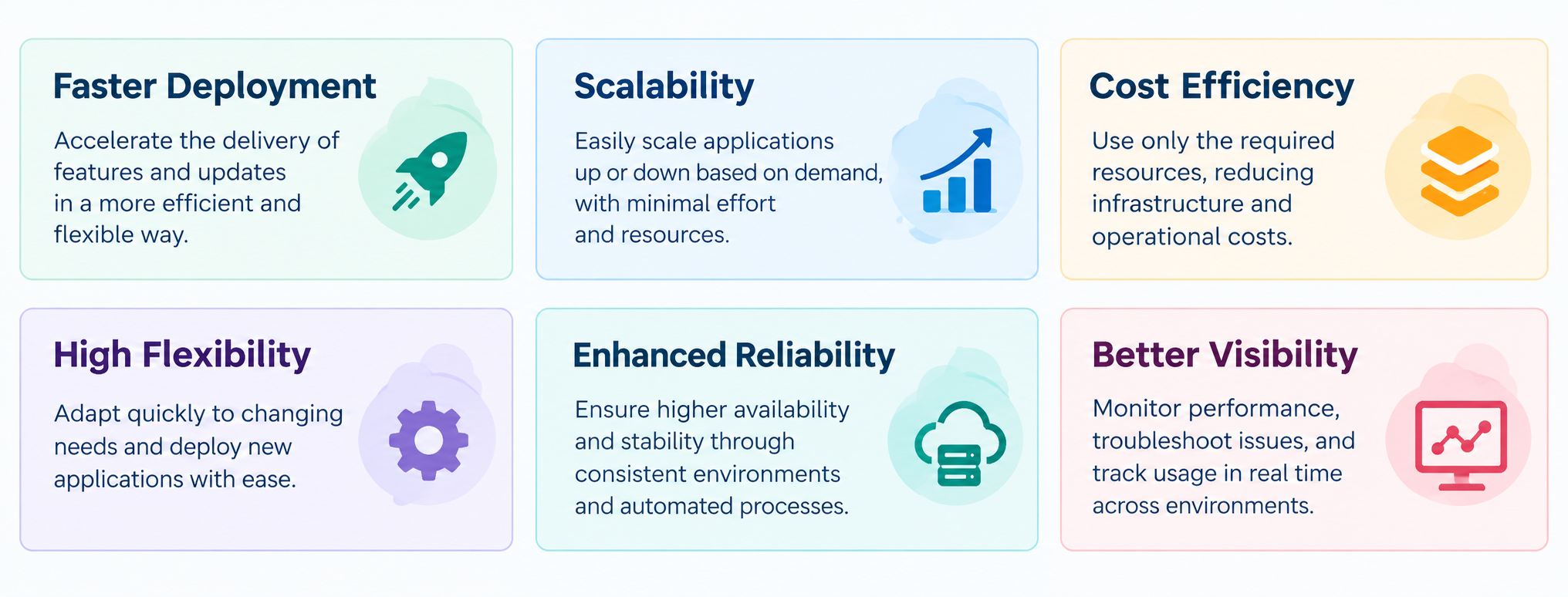
What Is the Real Value of CaaS?#
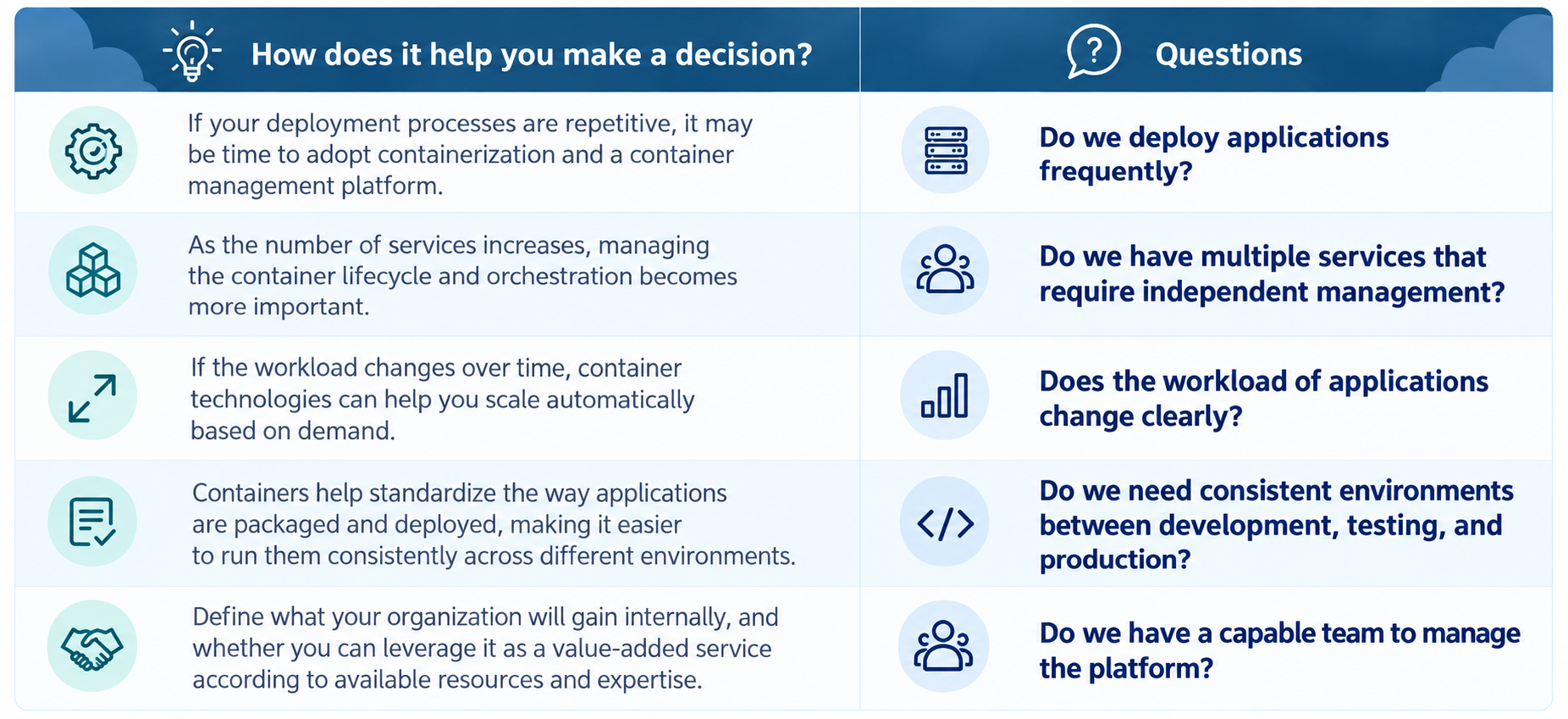
Does Your Organization Need CaaS?#
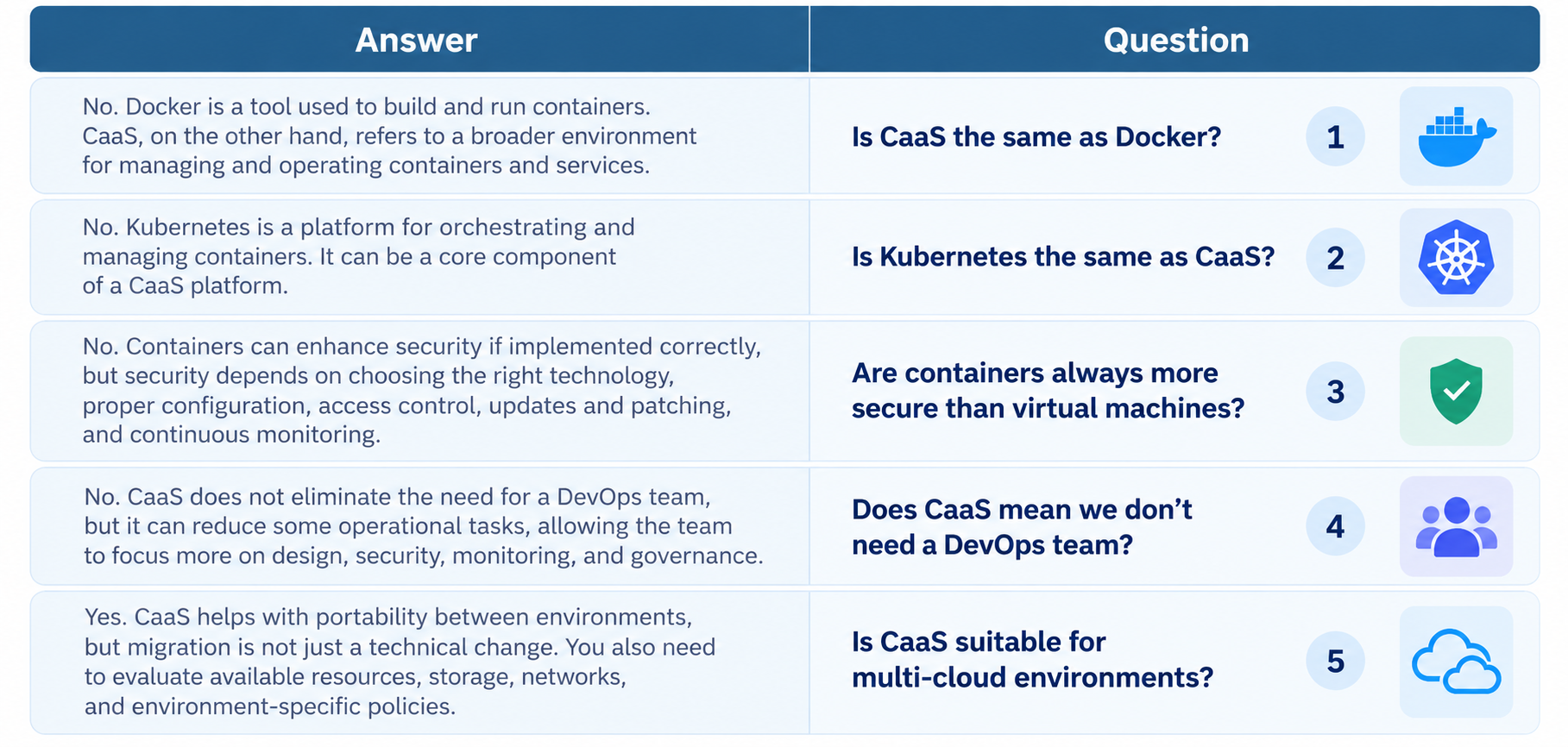
Frequently Asked Questions About CaaS (Containers as a Service)#
Conclusion#
CaaS helps organizations accelerate deployment, standardize environments, scale efficiently, and reduce manual operational work. However, its value depends on the organization’s needs and the nature of its applications. Therefore, start with the problem, then choose the technology that best fits your needs.
Rate this article
Be the first to rate this article
Comments & Discussion0
Related articles
"An Infrastructure Engineer's Guide to Colocation: Balancing Engineering Needs and Migration Viability"  الحوسبة السحابية
"An Infrastructure Engineer's Guide to Colocation: Balancing Engineering Needs and Migration Viability"
A realistic engineering perspective on hosting server and network infrastructure in colocation data centers—covering power and cooling standards, network connectivity, uplinks, and field best practices for rack management and service continuity.
Emad Al-Hadheri